
Opinion: Five years after Cuba’s July 11 protests, silence persists
Updated: Oct 14
By Allan Tompkins
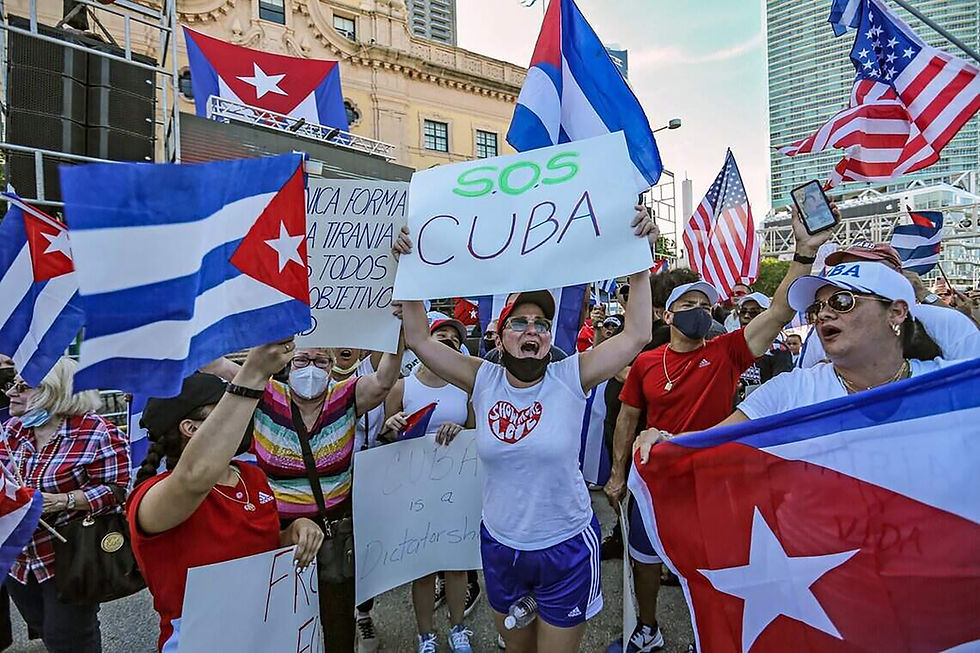
Human rights organizations have recorded 107 anti-government protests in Cuba in June 2026, nearly double the previous record. The current situation in Cuba appears to be at a critical juncture, yet there seems to be limited media coverage aimed at elevating this issue from a local to an international platform. For residents of Miami with familial or emotional ties to Cuba, the lack of awareness regarding what may be a significant turning point in the country's struggle raises questions: if the situation is at its worst, why is it not receiving more attention?
On July 11, 2021, during the peak of the COVID-19 pandemic, a combination of government mismanagement of the virus and shortages of food and medicine led to the largest anti-government protests in Cuba since Fidel Castro's 1959 revolution. These protests attracted worldwide attention and prompted Cuban President Miguel Díaz-Canel to cut off internet access and detain approximately 1,400 protesters. This event, now referred to as 11J, sparked nationalistic sentiments among Cubans globally and remains prominent in Miami, where phrases such as #SOSCUBA continue to be displayed on Cuban bread sold at local bakeries.
However, Prisoners Defenders, a nonprofit human rights organization, reports that Cuba is currently holding 1,306 political prisoners, including 40 minors and many individuals who participated in the protests on July 11, 2021. In April 2023, the Cuban government pardoned 2,010 prisoners; however, those involved in the July 11 protests were specifically excluded from this amnesty. This situation, characterized as a significant and largely peaceful expression of dissent, has led to severe and prolonged punishments for many, which has received limited attention from the international community.
The grassroots movement against oppression in Cuba gained significant visibility in 2021. However, on the five-year anniversary of the July 11 protests, many Cubans express frustration that their plight is largely overlooked. In today's information age, the rapid consumption of news may affect how we perceive and respond to real-world events.
One possible explanation lies in what researchers call empathy burnout. A study by the United Way of the National Capital Area found that Americans reported a 14% decrease in their empathy during the pandemic compared to before it, citing exhaustion from a continuous cycle of crises—COVID-19, political unrest, and one emergency leading into another. Even after the COVID-19 pandemic, crises did not diminish as the Russia-Ukraine conflict escalated, and tensions involving the U.S. and Iran continue. If this fatigue is genuine, Cuba may be experiencing the consequences of unfortunate timing.

The feelings of being overwhelmed and lacking the energy to engage with surrounding issues can be attributed to the extremes that social media presents to billions worldwide. Today, it appears that if a news headline does not surpass its predecessor in intensity, it is deemed unworthy of attention. In the case of Cuba, there is no prominent conflict or immediate threat of nuclear confrontation, which contributes to its relegation in the news cycle while more sensational headlines dominate the discourse.
These sensational headlines ultimately serve as distractions that foster division among people and hinder awareness of larger injustices occurring daily. This lack of awareness has allowed individuals who express dissent to be imprisoned for up to 20 years with minimal response from the international community.
In my experience at a school where many students have Cuban heritage—reflected in the music they listen to, the stories of their grandparents, or a flag displayed in their homes—most of my classmates are unaware of the situation in Cuba. Despite the majority of protests for Cuba occurring in Miami, even geographic proximity does not seem to motivate a significant portion of my peers to engage with the struggles faced by their families and friends.
While many residents of Miami owe their current circumstances to the courageous efforts of their families who fled Cuba, it seems unjust to neglect those who remain. There were 107 protests for Cuba in just one month. Cubans have not gone silent; rather, we have.


Comments